
There was time when the rhythm of my life was largely determined by the expectations and seasons of the ecclesial calendar. While I now enjoy the freedom that retirement from church-based ministry offers, I do miss some of the rhythms, and even the disciplines, that pastoral engagement entails. That is particularly so in the ‘high’ seasons of the church year, like Easter and Advent and Christmas. So, this year I thought that over the four weeks leading up to Christmas I would revisit the ‘discipline’ of Advent with its traditional themes of Hope, Peace, Joy, and Love. In this second week in Advent, we focus on Peace – shalom – turning our minds and hearts towards claiming that deep serenity, harmony, wholeness that will be one outworking of the Spirit of God within us.
I’ve always thought it a little ironic that, just as the Christmas season gathers momentum and we get busy with present-buying and food shopping and calendar-juggling and work deadlines, we are invited, perhaps challenged, to focus on Peace. For many people, Christmas is not a particularly ‘peaceful’ time – fun, certainly, but hardly peaceful as we manage children, end-of-year break-ups, family gatherings, traffic, over-eating, and everything else. All that in the context of a wider world riven, in so many places and dimensions, by war and conflict: it may feel quite incongruous to be announcing peace in this Advent season.
As it may have been when John the Baptist, amidst the Roman occupation of Palestine some 2000 years ago, emerged from the desert to proclaim a new world order of peace and justice. Most of the people who heard him thought he was crazy, and the religious leaders ridiculed him as another hair-brained fool who seemed to think he was Elijah. The more sympathetic may have regarded him as a wide-eyed idealist – nice concept, but totally out of touch with reality, a dreamer who’d been out in the desert sun for too long.
I mention John the Baptist because the gospel reading prescribed for the second Sunday in Advent – Luke 3:1-6 – tells his story, summarising his message with those familiar words, Prepare the way of the Lord. The lectionary, it seems, is urging us to follow John’s lead and prepare ourselves to receive the new age of peace and justice that will be instigated by our celebration of the incarnation of God in Jesus. Sounds wonderful – but does it really ring true in the context of our personal and global experiences? The first-century world into which John the Baptist spoke certainly continued its course of violence and injustice, and the following two thousand seasons of Advent and Christmas do not appear to have quenched the human proclivity for war. So, what’s the point of revisiting this theme of peace year after year if no-one is listening?
Well, I believe the answer to my rhetorical question lies in how we understand the ‘incarnation of God’ and how we conceive of peace. By the way, I don’t believe that ‘no-one is listening’ – witness the plethora of peace marches and demonstrations and protests around the world – but I do suspect that the Christian Church is not communicating well what is meant by either the incarnation or peace. Let me explain.
First, the incarnation. It may be bad timing to declare it at this time of year, but I don’t need to believe in the ‘virgin birth’. I don’t need to hold that Jesus was born by some magical, mystical, non-sexual means in order to believe he was the son of God. Because what stood out as something special and led to his identification as ‘Son of God’ was not his birth, but his life and teaching, his essence and personhood. In fact, the gospel birth narratives were created after his death, as a way of explaining the special relationship with God that was evident in his life! Jesus’ designation as ‘Son of God’ was born out of the way he lived, not out of the way he was born.
Significantly, this understanding of the incarnation doesn’t diminish the wonder of Jesus’ birth, it amplifies it. Because it suggests that any one of us, if we faithfully follow the Way of Jesus, can experience, and live out of, the same depth of relationship with God! Of course, that may be a challenge for most of us – it may not even seem humanly possible – but with Jesus’ life and teaching as our guide, and with the spark of the Spirit within us, we undertake the journey we call life, seeking with every step to move closer and closer to the wholeness and harmony and wellbeing that is the outcome of deep connection with God. (For an outline of my concept of ‘God’ see my article, Am I a Christian Atheist?)
Which brings us to the nature of peace. Said Gandhi, Peace is not the absence of conflict but the ability to cope with it. American President Ronald Reagan (believe it or not) expanded on this thought when he said, Peace is not the absence of conflict, it is the ability to handle conflict by peaceful means. Both insights may have been grounded in an awareness of the life and teaching of Jesus, whose life was marked by a deep, deep sense of shalom – of wholeness, wellbeing, serenity and harmony – even in the most challenging and threatening circumstances.
Jesus, Gandhi, Reagan and so many others who have uttered similar words point us to an essential wisdom: true peace begins within each one of us. Lasting peace will not be effected by any external intervention or regulation, and certainly not by any divine cataclysmic disruption of the human experience. It will be ushered in by the determination of people of goodwill to search within themselves and, discovering there the deep well of shalom that is the essence or spark of the Creator Spirit, learning to live intentionally and consistently out of that well.
Does that make sense? Further, this is not a uniquely Christian quest. It is a yearning common to all faith systems – enlightenment in Buddhism, moksha in Hindu, Paradise in Islam, mukti (liberation) in the Sikh faith, Eck in the Eckankar faith etc, etc are anchored in the quest to discern the centre of deep peace and harmony within.
I love the pageantry, the music, the mystery, the wonder of the traditional Christmas story, but it does tend to point beyond the real world and imply that our yearning is for God to come again, just like in the Christmas story, and to act in some dramatic way to ‘rescue’ a fallen humanity. But that was never the point of the incarnation. Rather, the point of the incarnation is the revelation that the Creator Spirit can be ‘born’ within each and every one of us, in every place and in every time, and that the solution to what ails us is embedded within us, if only we might choose to seek it.
How might we discern this deep centre of peace? How might we cultivate shalom in this Advent season?
It’s not at all difficult. One simple strategy: take time to breathe! Create spaces in your life for reflective practice: go for a walk, lie on the grass, smell the roses, revel in nature, listen to music, bask in silence, meditate etc. Create spaces that will allow the Creator Spirit to do its work within you.
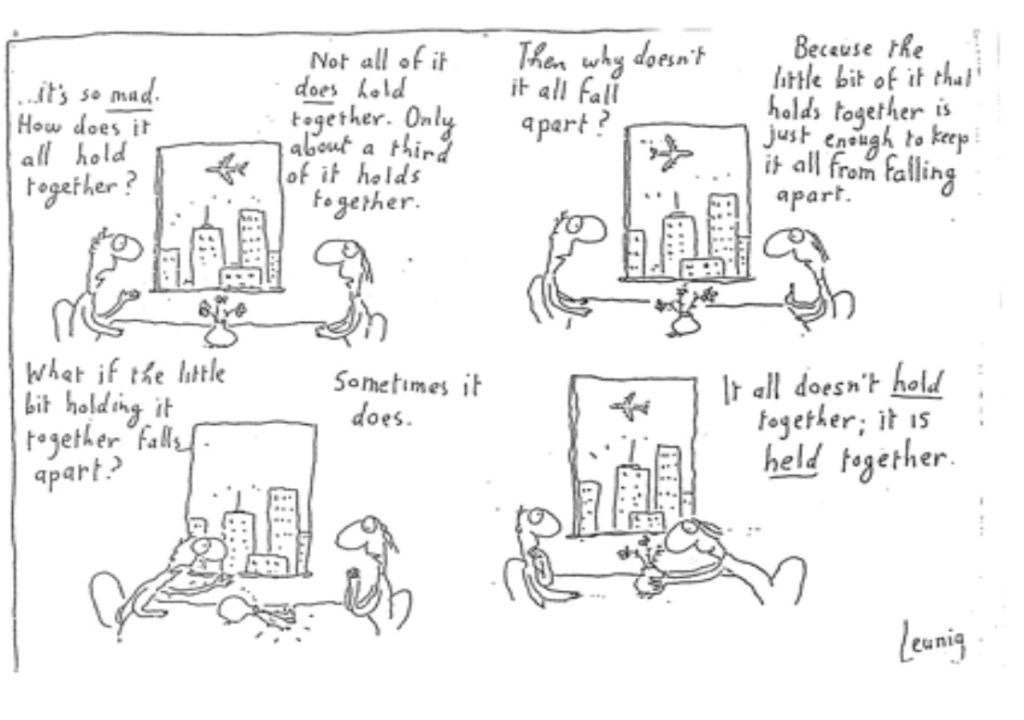
And when you find yourself in a situation that creates anxiety or feels overwhelming or assaults your senses with loud noise or frenetic crowds, take a deep breath, centre yourself, and anchor into that deep well of peace that is within you. It is there and you can breathe your way into it – the assurance that, despite signs to the contrary, all will be well, all will be well, and everything is OK. Because the God of Jesus, the spark of the Creator Spirit, is with and within us, guiding us to shalom – wholeness, wellbeing and harmony.
David Brooker (10th December 2024)
 OldSoul.blog
Leave a comment